BIO
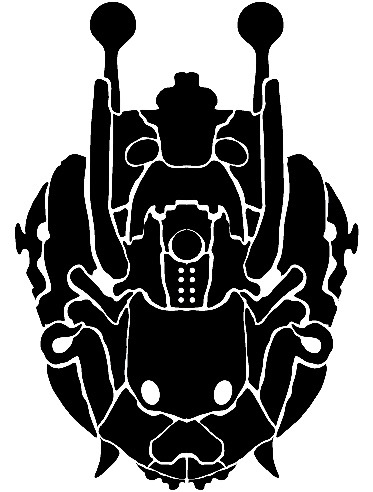
JUNKO is a third-generation Chinese and French-Canadian street artist born in Toronto (Tkaronto) and currently based in Montreal (Tiohtià:ke, Mooniyang) that creates sculptures out of reclaimed waste materials. Their work ranges in size from small to large-scale and draws inspiration from the natural world, fantasy and futurism, with a strong focus on the environmental impacts of over-consumption.
JUNKO’s career as a street artist began building unsanctioned sculpture installations in neglected and often overlooked public spaces in Montreal, which has evolved into professional work throughout Canada, from Montreal, to Toronto and Vancouver. Their sculpture practice builds on the knowledge they hold in sustainable construction, having worked on numerous projects creating structures out of reclaimed and natural materials. Their work has been shown in a variety of settings, such as the mural festivals (MURAL, VMF) of both Montreal and Vancouver, the MEM (centre des mémoires montréalaises) and the Royal Ontario Museum in Toronto, and has been reported on by various news outlets across Canada. (CBC, CTV News, Global News)
ARTISTIC STATEMENT
My work stems from a deep fascination with the biodiversity of the natural world and the complexity of our built environment. I am drawn to processes of hybridization across living systems and technological structures, where organic and mechanical logics begin to echo one another. I am particularly inspired by the physiological intricacies of plants and animals, the architectures of exoskeletons, cellular patterns, and adaptive forms which often operate like intricate systems or living infrastructures.
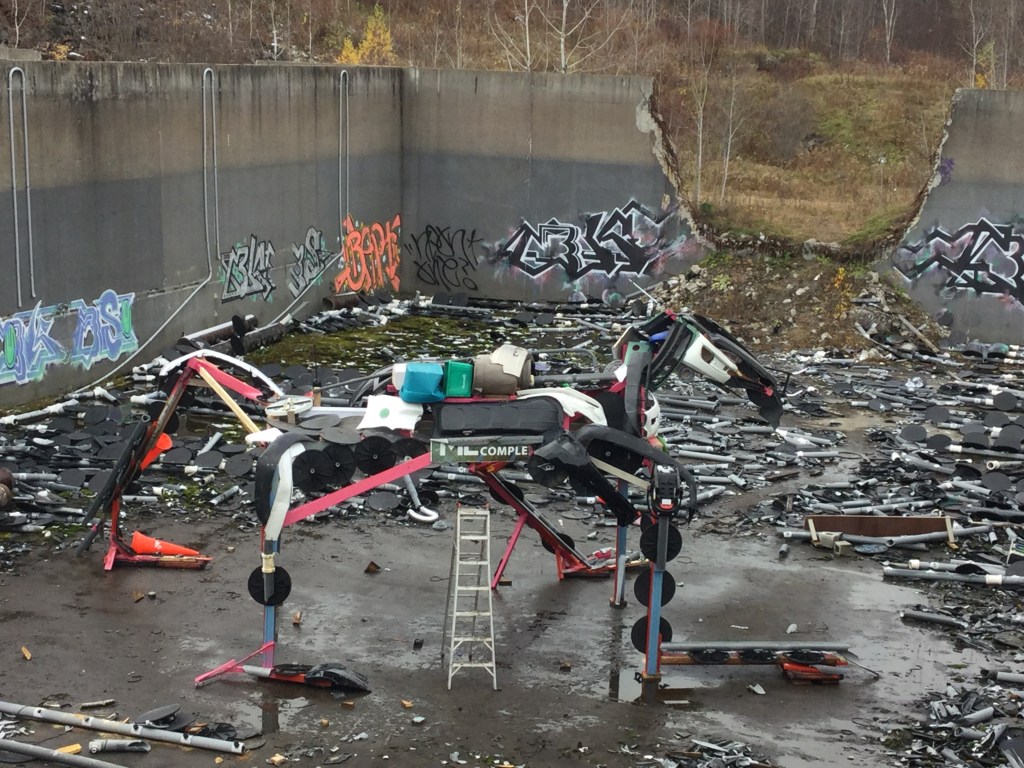
I combine visual elements from these organisms to create speculative forms that emerge between existing life and imagination. I build sculptural street works through site-specific installations and commissioned projects using reclaimed and natural materials, traces of over-consumption. Mapping and engaging with each site is central to my process. I am particularly drawn to abandoned spaces, industrial ruins, dense urban cores, and pockets of urban green, places where cycles of growth, neglect, and transformation are most visible.
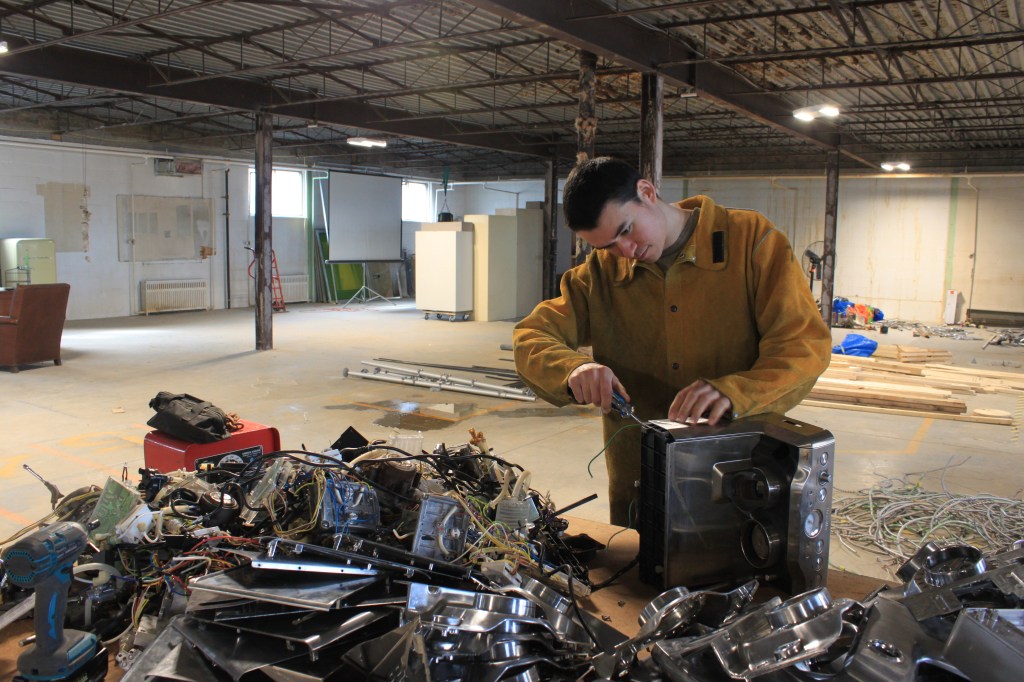
Through the use of these materials, I construct sculptures that blur boundaries between the biological and the industrial, the discarded and the futuristic, honouring the histories embedded in urban objects while reactivating them within new narratives. My process involves collecting residual parts and matter from salvage depots, automobile garages, small businesses, donation streams, and the street. I seek out elements with resonant qualities, shared colour, texture, or form that can be assembled into cohesive, complex structures. Amongst this miscellany are scrap car parts, retired bicycles, kitchen appliances like fans and coffee machines, electronics, wires, light fixtures and anything that is often considered junk.
I work with these objects for both their structural and symbolic capacities, extending their lifespan and intensifying the value of the resources embedded within them. By reconfiguring what has been discarded, I aim to draw out the potential still held within these materials, what remains after their initial function has ended.
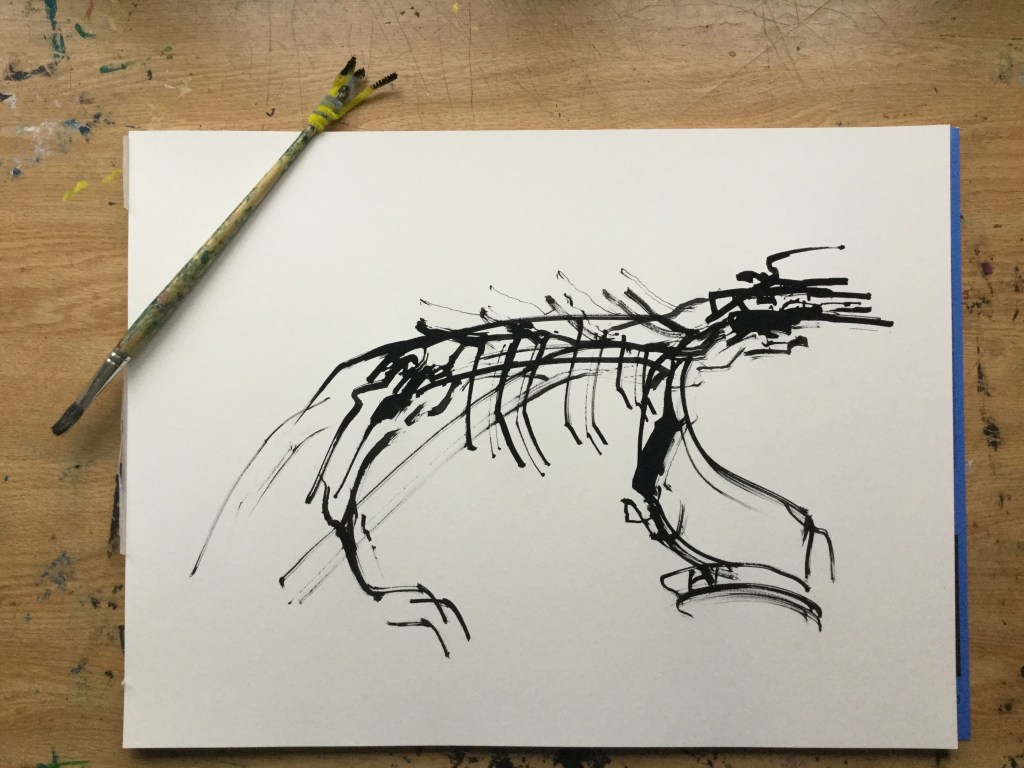
My construction process begins with a carefully engineered armature that responds to form, site, and installation constraints, often incorporating modular systems for mobility. In contrast, the integration of reclaimed materials unfolds more intuitively. My work is deeply attuned to public interaction and environmental context. Through large-scale installations, I invite dialogue around climate, pollution, and urban transformation. Each piece considers its placement as a form of coexistence, fostering interaction, collective meaning-making, and a sense of belonging within shared urban landscapes.
 JUNKO
JUNKO 